

NVIDIA posted $81.6 billion in revenue and $58.3 billion in profit in a single quarter, more profit in 90 days than Intel made in revenue all of last year. The same week, Anthropic moved to close a $30 billion round at a $900 billion-plus valuation, passing OpenAI for the first time, and banks started selling commercial real estate loans at 85 percent off. The AI capex fund strategy for 2026 is simple: stop betting on a pullback, position for sustained trillion-dollar infrastructure spend, and use the bank capitulation in CRE as the deal-flow window it actually is. Macro read, deck edits, and the email to your LPs inside.
Eighty-one-point-six billion dollars. In one quarter.
On May 20, NVIDIA reported fiscal Q1 2027 revenue of $81.6 billion, up 85 percent year over year, and beat the Wall Street estimate of $79.2 billion by more than two billion dollars. The stock dropped 1.3 percent after hours. Read that again. They beat by over two billion and the stock fell. That is what happens when a number that should be shocking becomes the new normal. Wall Street has officially priced in the AI buildout.
Here is the line that matters for fund operators, though. Net income of $58.3 billion. In one quarter. Intel's total revenue for all of 2025 was $54.2 billion. NVIDIA made more in pure profit in three months than Intel made in revenue in twelve. That single comparison is the whole AI capex story in one breath, and it is the reason your fund's macro slide can no longer treat AI as someone else's narrative.
This was a News Hour week where everything accelerated at once. Let's walk the three that change how you raise and deploy capital: the AI capex supercycle, the Anthropic-past-OpenAI moment, and the commercial real estate capitulation that just unlocked the biggest discount window since the GFC. Then the one identity shift the whole cycle is asking for.
Is the AI buildout a bubble, or the new macro regime?
It is the new regime, not a bubble. NVIDIA's data center segment alone did $75.2 billion last quarter, up 92 percent, and the company guided $91 billion for next quarter. Hyperscalers, Microsoft, Google, Meta, and Amazon, guided combined 2026 capex above $700 billion, roughly three quarters of it AI infrastructure. Wall Street now forecasts total Big Tech capex above $1 trillion in 2027. That is a sustained, multi-year arms race, and NVIDIA is the toll road every hyperscaler has to drive on.
The default take from finance Twitter is the standard "AI is in a bubble" post. Every value investor dusts off a 2000-era spreadsheet and tells you NVIDIA is overvalued. The bubble framing assumes capex outruns revenue. The numbers say the opposite is happening. NVIDIA even raised its dividend 25x and authorized an $80 billion buyback, which is what you do when you have run out of profitable internal uses for cash. You can track the raw quarterly numbers on NVIDIA's investor newsroom.
The segment most operators are not watching is sovereign AI: countries buying their own national compute. It crossed $30 billion in fiscal 2026, three times the prior year, about 14 percent of total revenue. Governments are now a structural buyer of chips. A trillion dollars a year of AI infrastructure spend, with a sovereign floor underneath it, is not a quarter-to-quarter story. It is the macro variable your strategy has to answer to.

Here is the one thing to do this week. Open your pitch deck, find the macro slide, and add a single bullet: "AI infrastructure capex is structurally above $700 billion in 2026 and projected above $1 trillion in 2027. We are positioned for a world where that capex is the dominant macro variable." Then add two sub-bullets explaining why your strategy benefits. If you cannot write those two sub-bullets, that is information too. Your thesis needs to evolve.
What does Anthropic passing OpenAI mean for your raise?
Anthropic moved to close a roughly $30 billion round at a $900 billion-plus valuation, passing OpenAI for the first time. Its annualized revenue went from $14 billion in February to $30 billion by April, doubling in about twelve weeks, the fastest pre-IPO revenue ramp in modern tech outside SpaceX. OpenAI is preparing its own IPO filing. For you, that means there is now a new, heavily marketed competitor for every LP dollar: pre-IPO AI secondary shares your wealth-advisor-backed LPs are already being pitched.
This is direct competition for the same capital that would go into your fund. The pre-IPO secondary market for Anthropic shares at a $900 billion mark is already active, and wealth advisors at the major shops are pitching it as a buy-the-inevitable-IPO play. Every advisor with a Bloomberg terminal just got a new pitch script. Your LP probably read it before they read yours. Anthropic publishes its own model and company news on Anthropic's newsroom, and the funding coverage has been running across Bloomberg all month.
So get ahead of the question before the LP asks it, because they will ask it in every meeting now. Add a slide called "the AI alternative" and address it head on with three honest bullets:
- Concentration: AI exposure is concentrated and correlated to chip cycles, GPU pricing, and model-release cadence. Our fund is uncorrelated to all three.
- Liquidity: AI returns require an IPO event to monetize. Our fund generates cash flow inside the first eighteen months.
- Comparison: An Anthropic secondary at $900 billion is illiquid private equity. Here is our liquidity profile next to it.
That slide is not defensive. It signals you understand the exact alternative on your LP's desk, which is what a serious allocator wants to hear. This is the same muscle we built in our breakdown of Anthropic's $1.5B Wall Street deal: when capital coordinates around AI, the operators who name it directly look sharper than the ones who pretend it is not happening.
Are you betting your firm on the right AI vendor?
The AI you build your firm on this year gets married to that vendor's API roadmap for the rest of the decade. On May 28, Anthropic released Claude Opus 4.8, which scored 69.2 percent on SWE-Bench Pro, the benchmark for agentic coding, versus 58.6 percent for GPT-5.5 and 54.2 percent for Gemini 3.1 Pro, with a new fast mode that is 3x cheaper and 2.5x faster. Picking your AI stack is a five-year lock-in decision, not a tool purchase. Bet on the loser and you re-platform in 2027 while competitors scale.
The numbers matter because they decide which automations actually run your fund. Here is the agentic-coding scoreboard from the late-May model releases:
| Model | SWE-Bench Pro (agentic coding) | Note for operators |
|---|---|---|
| Claude Opus 4.8 | 69.2% | Leads the field; fast mode 3x cheaper, 2.5x faster |
| GPT-5.5 | 58.6% | Still won Terminal-Bench 2.1 at 78.2%; not dead |
| Gemini 3.1 Pro | 54.2% | Trails on the operator-automation benchmark |
A ten-point gap on the benchmark that maps to real fund-operator workflows is not a rounding error. It is a migration argument. The wrong response is the usual benchmark-warring noise, "benchmarks are gamed, wait for the next model." The right response is to audit your own stack now. Open a doc, list every AI tool you pay for, the transcription tool, the CRM AI, the follow-up writer, the document intelligence. For each, write the underlying model: Anthropic, OpenAI, both, proprietary, open source. Then ask whether you are diversified, committed, or just floating. Floating is the wrong answer.
This is exactly why we run on a multi-model stack inside Fund Flow OS rather than betting the whole operation on one provider's roadmap. When the vendor wars get spicy, and they are about to, you do not want your investor relations engine welded to whoever ships second.
Flow AI is the AI employee you can't afford yet.
Fund Flow OS runs your investor outreach, drafts your follow-ups in your voice, and tracks your 506(b) relationships for compliance, all on a multi-model AI stack so you are never locked into one provider's roadmap. Code FIRE gets you 50% off your first three months. Free to start.
Warsh got sworn in. What macro regime should your deck assume?
Assume a regime where the Fed treats inflation as a policy choice and Fed independence is tested in public. Kevin Warsh was sworn in May 22 as the 17th Fed chair with eleven words Wall Street is not ready for: "I will lead a reform-oriented Federal Reserve." His version of reform is selling most of the Fed's balance sheet and ending the implicit Fed put. His first FOMC is June 16 to 17. Per the BofA fund manager survey, 62 percent of managers expect the 30-year Treasury to hit 6 percent by year end.
Warsh's definition of price stability is "a change in prices such that no one's talking about it." Right now everyone is talking about it, so by his own bar the job is not done, not even close. That is the most hawkish framing Wall Street has heard since Volcker. And at the swearing-in, on camera, Trump turned to Warsh and said "don't look at me, don't look at anybody," which is a president pre-positioning for the autonomy fight he knows is coming. Trump wants cuts. Warsh wants balance-sheet shrinkage. They clash in public inside ninety days. Mark it down.
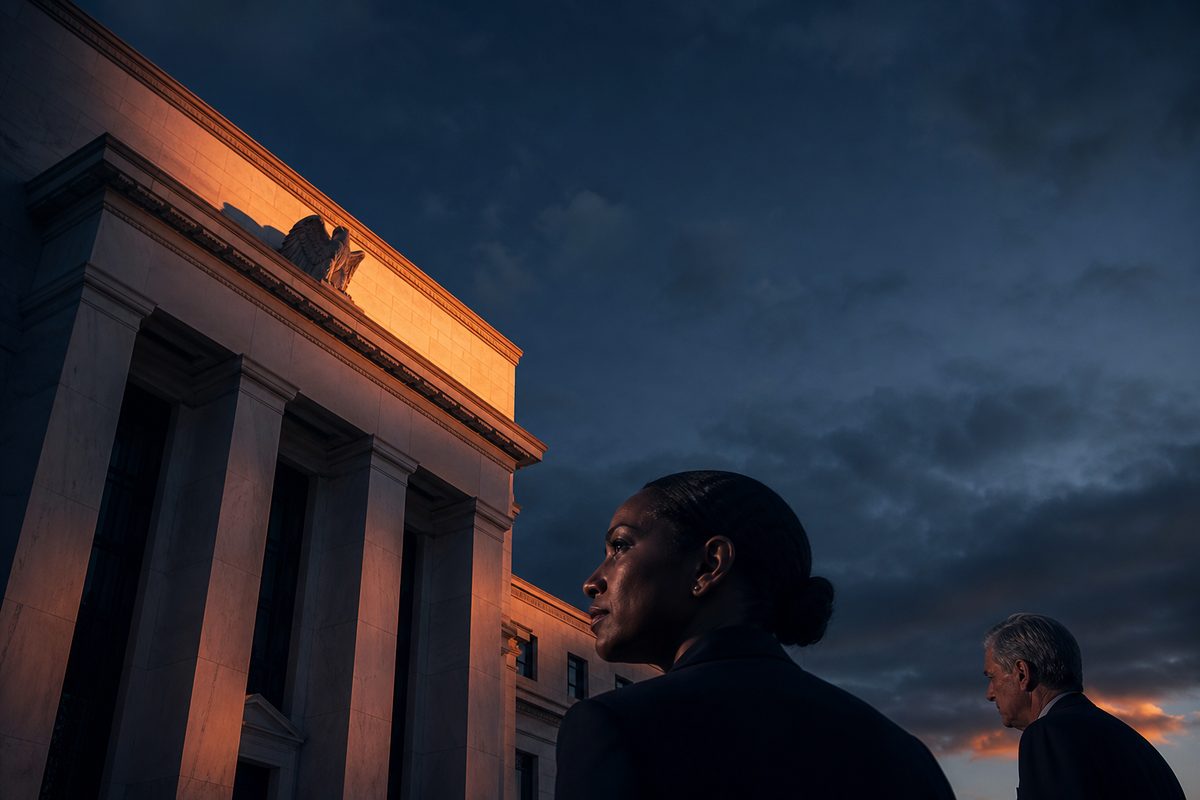
The reframe happens before the meeting, not after. The second the new chair's posture is clear, every allocator re-reads the decks on their desk. The ones leading with "we are positioned for falling rates" read like 2024 cosplay. So look at your macro slide today. Is the word "cut" in it? Rewrite it before June 16. We laid out the LP email and the underwriting reset for this exact moment in the Fed revolt playbook. Same move, sharper backdrop.
Why are banks dumping CRE debt at 85% off, and what do you do about it?
Extend and pretend is officially over. After three years of pretending the office market would recover, banks including Goldman, Deutsche Bank, and regional lenders started selling non-performing commercial real estate loans at discounts up to 85 percent. About $663 billion of CRE loans mature in 2026 and banks hold roughly 46 percent of that, so about $305 billion needs to be refinanced, restructured, or written down in the next seven months. That is the deal-flow window, not a reason to stay away.
Two specifics so this is not abstract. Shanghai Commercial Bank in New York sold a loan tied to a stalled condo conversion at 335 West 35th Street at an estimated 85 percent discount to payoff. And a San Francisco office tower CMBS deal where bondholders held $240 million in investment-grade paper saw the underlying loan sell with bondholders recovering $101 million, a 58 percent loss on bonds rated investment grade three years ago. Eighty-five percent off on the debt, not the building. That is what bank capitulation looks like.
The default take is "office is dead, stay away." Wrong. Office at this basis is the deal of the decade for operators who can underwrite a conversion. Here is the week's tactical move, two parts. First, build a one-page distressed-CRE buy box: target metros, discount thresholds, asset types, hold periods. Second, send your top twenty LP relationships a two-line note: "Banks are now dumping commercial real estate loans at 85 percent discounts. I'm building a buy box for the next 60 to 90 days. Want me to send you the first deal I lock in?" No deck. No pressure. Out of twenty, three to five reply inside 48 hours and one or two book. That is your week. If you are still sizing whether you can even play, our breakdown of how much it actually costs to launch a fund kills the $20M-minimum myth.
The reframe: you have a fund, but do you have a firm?
The tactical close came from an a16z episode with Tony James, the former president of Blackstone who built DLJ before it. His line has not left my head: the firm is the product, not the fund. His job at Blackstone was not picking deals. It was building the firm that picked the deals. He hired the team, built the structure, set the culture. The deals were a byproduct.
Most operators think their fund is the product. They are wrong, and that belief is the ceiling. A firm that depends entirely on you tops out around $50 million in AUM. Above that, structure has to take over, because vision alone does not survive market cycles, leadership transitions, or a single bad year. The firms that scaled, DLJ on the leveraged buyout, Blackstone on private credit, did it on governance and structure, plus the discipline to spot the structural arbitrage two to three years before consensus. In 2026 that arbitrage is AI-native fund operations and distressed commercial debt. You just got both handed to you in one week.
For thirty years the assumption was that an emerging manager's edge was hustle, one deal at a time. The acceleration this week says the edge is now structure plus AI leverage applied to a structural opportunity. From "I run a fund" to "I am building a firm." That is the identity shift this moment is asking for. The funds that survive the next ten years are the ones that start building the firm in the next twelve months, not in year five.
Listen to the full News Hour episode
This article is the written companion to the Funds on Fire News Hour episode covering six stories from the last 30 days, each with a concrete capital-raising tactic. The audio version goes deeper on the NVIDIA financials, the Anthropic-versus-OpenAI IPO race, Claude Opus 4.8, the Warsh swearing-in politics, the CRE capitulation, and the lightning round, Karpathy joining Anthropic, the Pentagon's eight-company AI deal that shut Anthropic out, the Vatican's first AI encyclical, proptech's $1.7B January, and the contrarian Hormuz take, before closing on the one action to take this week.
Get the full 6-story news cycle in your ear.
Every episode ends with one tactical capital-raising action. Six stories, one playbook, every week.
Frequently asked questions
How much did NVIDIA make in its fiscal Q1 2027 quarter?
Did Anthropic pass OpenAI in valuation in 2026?
What is the AI capex fund strategy for 2026?
Why are banks selling commercial real estate loans at 85 percent off?
What does "the firm is the product" mean for fund operators?
To great success and greater impact.
Keep reading
 AI for Funds
Anthropic's $1.5B Wall Street Deal: AI Strategy For Funds
Goldman, Blackstone, and Hellman & Friedman each wrote $300M into Anthropic. Here's the three-tool AI stack to install before your next LP call.
 News Hour
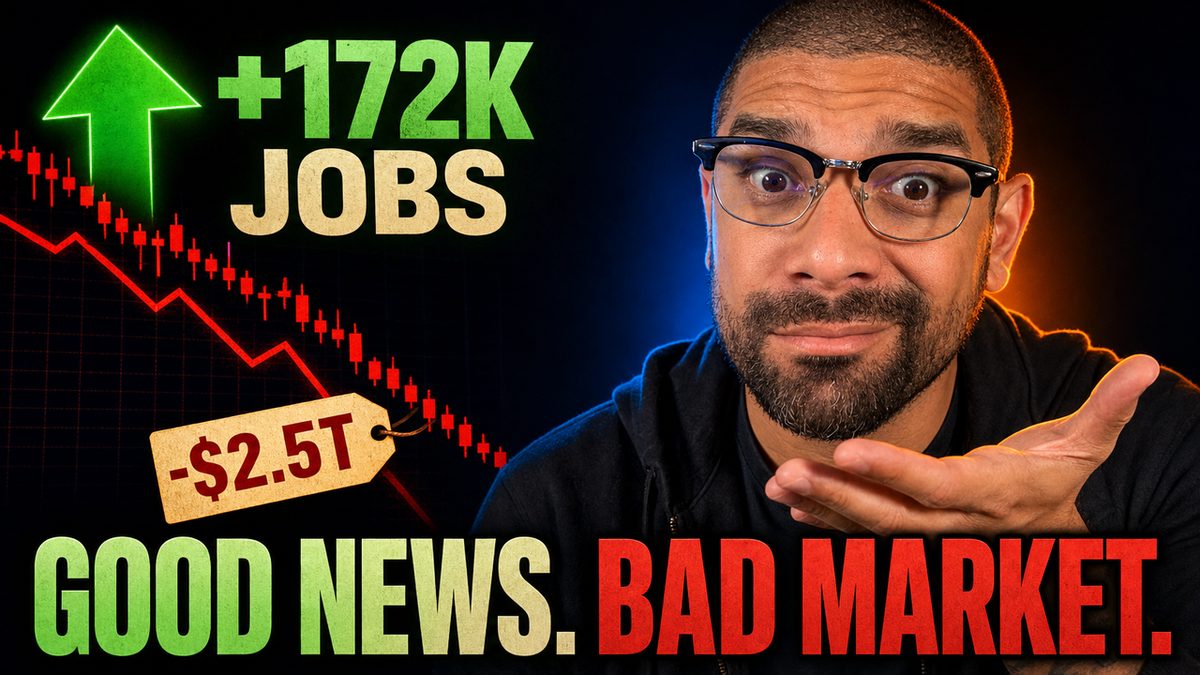
Good News Broke the Market: The SpaceX IPO Liquidity Vacuum
172K jobs, $2.5T erased the same day. The SpaceX IPO is draining the market and your 401k is forced to buy it. Your fund's move inside.